"A man filled with the love of God is not content with blessing his family alone, but ranges through the whole world, anxious to bless the whole human race." Joseph Smith
Showing posts with label Tais. Show all posts

Friday, August 14, 2015

The Dili Tais Market

Tais is a traditional cloth made exclusively by women from Timor-Leste.  Intricate designs and colors combine together reflecting the dynamics of a people who for generations have clung to culture to bind them together. Skills carefully passed down from one generation to another preserve the knowledge that is unique and distinct to the people of Timor-Leste.

Each municipality in Timor-Leste produces Tais with their own woven pattern with unique colors and patterns. If you knew the patterns well enough, you could identify where in Timor-Leste your textile item came from.  

                                           Welcome to the Dili Tais Market!


Down this little alley are family-run shops full of Tais products, everything from bookmarks and purses to table runners and bedspreads.


The Tais Market is one of the key tourist stops in Dili.  Problem is, there aren't many tourists.....


Women weave the cloth with cotton thread traditionally dyed with tree roots, bark, flowers and other natural items that give the unique colors to the fabric. Today some of the dyes used are no longer from natural substances, but red is still the favorite color, being one of the national colors 
for longevity and courage.


This woman used a spinner to form the cotton threads, and here is rolling the cotton thread into a ball for dying and weaving.


These women show the traditional method used for making the Tais woven designs.


Over the years, this little area where the market now stands has been burned and destroyed multiple times by occupations forces.  In 2008, USAID began providing assistance to help vendors have a secure location for the setting up of stalls to sell their goods. Today babies feed in mothers arms, children grow up under feet, and boys play along the street - and life goes on in the little Tais Market.


Waiting for customers....


Elder Coffey made a new friend.  The mother is wearing a sarong - typical of the traditional skirts worn by many women.  Sometimes these sarongs are also made out of Tais fabric.


Table runners with the traditional colors. Red, yellow and  black are the colors of the country flag. I especially liked this one because it has the classic Timor-Leste crocodile image on it.  


Tais has been one of the ways that the Timorese people have held together culturally through the years of wars, destruction and genocide. Capturing the determined spirit of the people, Fernando Sylvan, a Timorese poet, writes:

Culture are the memories of a people who refuse to die!  
Action is the history of a people who refuse to die!
Did you hear me?
Did you hear me well?
Life is the freedom of a people who refuse to die!
Independence is the craving of a people who refuse to die!
Did you hear me?
Did you hear me well?
Justice is the endowment of a people who refuse to die!
Struggle is the finding of a people who refuse to die!
Did you hear me?
Did you hear me well?


Sunday, June 28, 2015

"Build My People, Build My Nation"

Our LDS Charities exploratory trip to Timor-Leste was largely to meet with government and NGO (non-government organizations) agencies to learn more about the work they are doing that might coincide well with LDS Charities.  We wanted to know what kind of needs there are and how LDS Charities can help.

Our first meetings were with the Australian and United States Embassies.  They were very welcoming to LDSC and shared recommendations and possible contacts for us. 

We next met with the East Timor Development Agency, which we blogged about in our previous post.  They have a most powerful logo. 


The logo shows a picture of a clay pot with a crocodile on it (no – that is not a gecko, I was told!!)  The crocodile is important to Timor-Leste tradition. It was a crocodile that made the island, the story goes, and there are salt-water crocodiles that line the coast (this is for reals).  So this pot on the logo – it was broken in many pieces, representing the warring factions and various tribes of the country, but is now held together by nationalism and an independent country. The matrix of dots and lines in the circle surrounding it represents the many organizations, initiatives and agencies coming together to form a network of support to help develop and grow the country. The three colors behind the logo represent the colors of the flag of the resistance movement that led the country to freedom. Below the logo are the Tetum words:
“Build my people.  Build my nation.”

And that’s just what they are doing. And what LDS Charities wants to do too. 

We visited the Centro Nacional de Reabilitação,  (CNR) – the National Rehabilitation Center. They work with the Ministry of Health to prepare wheelchairs for the disabled, and were happy to hear of our wheelchair initiatives. 

This little wheelchair-bound girl outside the office caught my eye and I couldn't help but stop and try to bring a smile to her face.


We visited the tais market. Tais (pronounced “ties”) is a traditional woven cloth made solely by women in Timor-Leste, with dyes authentically made from local bark, flowers, and other natural substances to produce the vibrant colors.  Each tribe has its own unique Tais pattern and colors, not unlike Scottish kilts. 


Tais showing the Timorese flag in the background

A single tais can take from several days up to a year to create, depending on the complexity of design and colors used.

One of our grandsons wanted to donate some toys to the children of Timor-Leste when he found out we were going there. Time to stop and give a couple of toy cars to some boys at the market. At first they were shy, but it ended up being quite a scene once everyone got the hang of it!  


Timor-Leste is a Christian nation, 96% Catholic. In 1996, the Indonesian government commissioned the 27 meter statue of Cristo Rei (Christ, the King),
Elder Coffey climbs up to the Cristo Rei statue
made up of 27 copper sections, (Timor-Leste was the 27th province of Indonesia) as a gift to the people. At the time, Timor-Leste was still considered a province of Indonesia, and the gift was a recognition of the 20th year of its integration into Indonesia from previous Portuguese occupation. This gift, even amidst the years of struggle, invasion and annihilation

There are 597 steps to reach the top. In case you want to try it.  The view is worth it - just try doing it in as cool of a time of year as possible.  (July is the coolest month - highs are only around 88 degrees or so.)


Elder and Sister Coffey with Tino Mac.  Cristo Rei is in the background.
We still have well over 100 steps to go to the top.


View from Cristo Rei, with Dili, the capital, in the far background

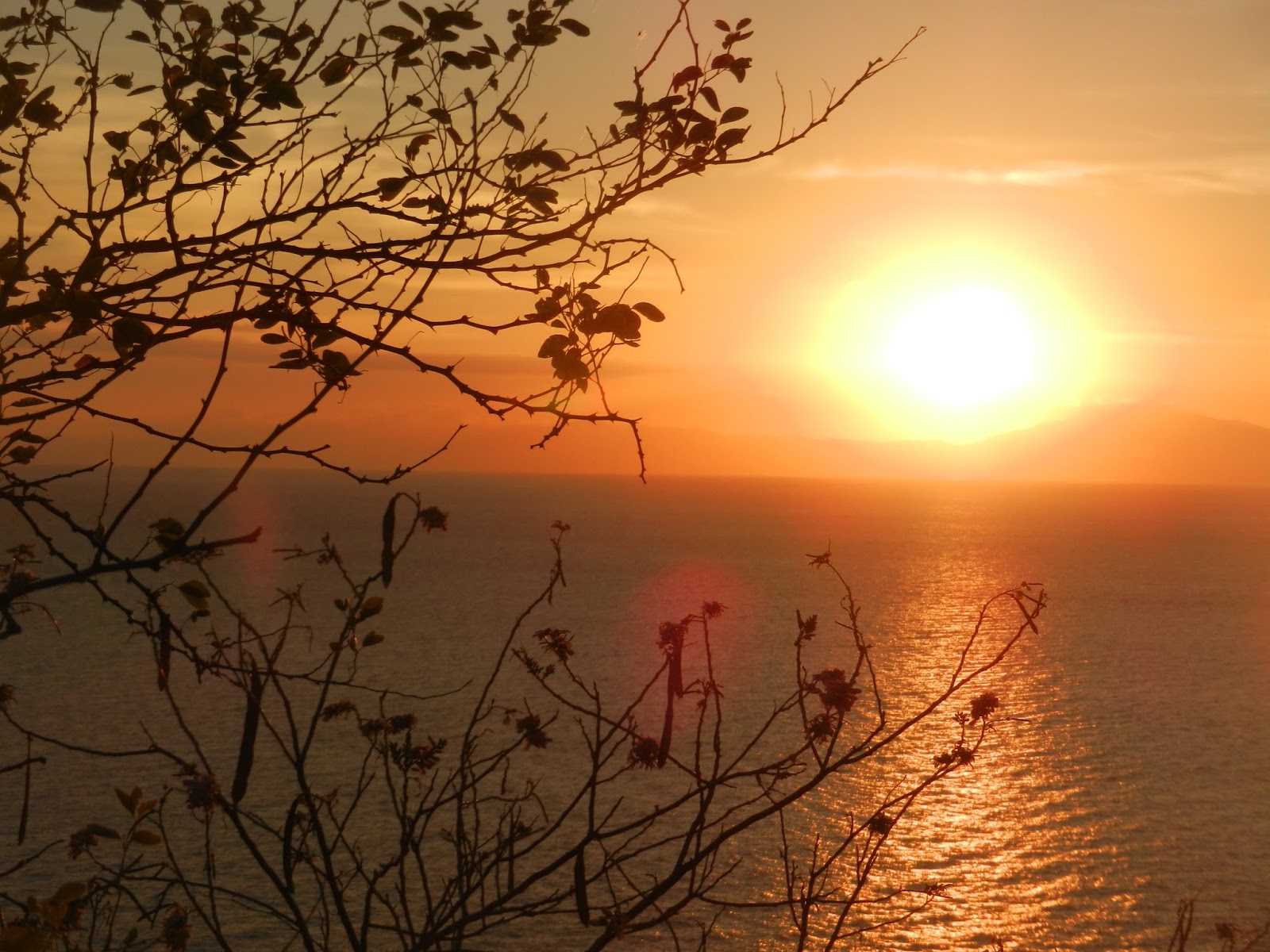
And the sunsets are gorgeous.  People come from all over just to watch the sunset. It's amazing how quickly we fell in love with Timor-Leste. What a blessing for LDS Charities to be able to be a part of the wonders of the Land of Discovery.